Barcelona Spiritual Open Innovation Safari

Barcelona Spiritual Open Innovation Safari

Explore one of Europe’s most unique ecosystems of spirituality, reflection and cultural transformation

Location: Barcelona – Themes: Spirituality / Mindset / Culture / Inner Innovation – Duration: One Day

The Barcelona Spiritual Open Innovation Safari is a one-day immersive experience designed for professionals who want to explore how spirituality, reflection and inner awareness can inspire new ways of thinking, leading and innovating.

Led by Certified Innovation Safari Sherpa Oriol Ribera, this Safari introduces explorers to a unique ecosystem where tradition, culture and spirituality converge, offering spaces for reflection, inspiration and transformation.

During the experience, explorers will discover how different spiritual traditions, environments and practices can influence mindset, creativity, leadership and decision-making.

Explorers will explore topics such as:

  • spirituality and personal transformation
  • mindset and conscious leadership
  • reflection and decision-making
  • cultural and spiritual heritage

Innovation Safaris allow professionals to experience innovation where it actually happens.

The experience

The Safari combines curated exploration with reflective activities designed to encourage learning, awareness and inspiration.

Explorers will explore key spiritual hotspots across Barcelona and Catalonia:

  • Sagrada Família – A global symbol of spirituality, architecture and transcendence, where creativity and faith merge.
  • Barcelona Cathedral – A historic spiritual center reflecting centuries of tradition, community and cultural identity.
  • Montserrat Monastery – One of the most iconic spiritual and natural environments in Catalonia, combining nature, silence and contemplation.
  • Sakya Tashi Ling Buddhist Monastery – A unique Buddhist monastery offering a different perspective on spirituality, mindfulness and inner balance.
  • Monastery of Sant Pere de Rodes – A historic monastery located in a breathtaking natural setting, ideal for reflection and perspective.
  • Cistercian Route Monasteries – A network of monasteries representing silence, discipline and spiritual tradition across the territory.
  • Sanctuary of Queralt – A peaceful mountain sanctuary offering panoramic views and a strong sense of introspection.

Participants will:

  • explore spiritual and cultural environments across Catalonia
  • experience spaces designed for reflection, silence and inspiration
  • join guided discussions on mindset, purpose and personal transformation
  • connect spirituality with innovation, leadership and creativity

This immersive approach helps participants better understand how Spiritual ecosystems operate in practice.

What explorers will gain

Explorers will learn and design by:

  • discovering new perspectives on leadership and decision-making
  • understanding the role of reflection and awareness in innovation
  • connecting with diverse cultural and spiritual environments
  • generating ideas and inspiration for personal and professional transformation

Who Should Join

  • corporate leaders and executives
  • innovation and strategy professionals
  • entrepreneurs and startup founders
  • HR and people development leaders
  • professionals interested in mindset, purpose and transformation

Participants from different sectors are encouraged to join and share perspectives.

Limited group to ensure a high-quality exploration experience.
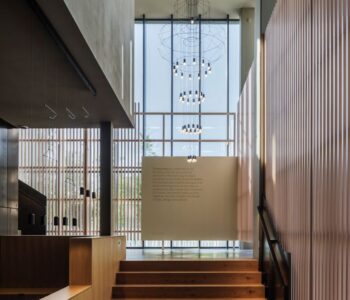
VIBIA Lab

VIBIA Lab

The main VIBIA showroom and headquarters are located in Barcelona, featuring a massive 2,050m2 space designed by Francesc Rifé and Sònia Pellicer. The showroom showcases innovative lighting systems arranged as “small architectures,” featuring a, “Light your Way” space for interaction.

Vibia Showroom Highlights (Barcelona Headquarters):

  • Design & Structure: Designed by Francesc Rifé Studio, it features a pink-colored lattice entrance, featuring a 1,170 m2 area dedicated to showcasing products.
  • Exhibition Space: Organized like a “small architecture” experience with lattice screens, curtains, and curated lighting collections.
  • “Light Your Way” Hub: A core interactive area designed for visitors to experience and customize lighting projects.
  • Connecting Terrace: A designated outdoor area designed by Josep Lluis Xuclà.

International Presence:

  • Sydney Vibia Hub: A new, dedicated Vibia Hub was established at the Euroluce showroom in Sydney to express the brand’s “Shaping Atmospheres” concept in Australia.
  • Project Showrooms: Vibia lights significant partnership spaces, such as the Cosentino showroom in Toronto, demonstrating their lighting technology in tailored environments.

The VIBIA LAB acts as a key gathering point for designers and architects to explore Vibia’s focus on lighting designed for wellbeing.

Gaudi Innovation

Barcelona Gaudí Open Innovation Safari

Explore one of Barcelona’s most inspiring ecosystems of creativity, architecture and innovation

Location: Barcelona – Themes: Gaudí / Architecture / Creativity / Nature Inspiration – Duration: One Day

The Barcelona Gaudí Open Innovation Safari is a one-day immersive experience designed for professionals who want to explore how creativity, architecture and nature-inspired thinking can become powerful drivers of innovation.

Led by Certified Innovation Safari Sherpa Francesc Saldaña, this Safari introduces explorers to a unique Barcelona ecosystem shaped by the legacy of Antoni Gaudí, where architecture, craftsmanship, engineering and imagination come together to create timeless innovation.

During the experience, explorers will discover how Gaudí’s way of thinking continues to inspire new approaches to design, urban challenges, sustainability and cross-disciplinary creativity.

Explorers will explore topics such as:

  • biomimicry and nature-inspired innovation
  • creative problem solving
  • architecture as a system of innovation
  • design, craftsmanship and experimentation

The experience

The Safari combines curated exploration with interactive activities designed to encourage learning, discussion and inspiration.

Explorers will explore key innovation hotspots connected to Gaudí’s legacy and Barcelona’s creative ecosystem:

  • Colònia Güell – A key Gaudí hotspot where explorers can discover experimental structural thinking, nature-inspired forms and one of the most innovative architectural approaches of its time.
  • Sagrada Família – A world reference where architecture, engineering, symbolism and long-term vision come together in a living example of continuous innovation.
  • Recinte Modernista de Sant Pau – A unique space where architecture, wellbeing, urban design and creative vision meet in one of Barcelona’s most inspiring built environments.

Participants will:

  • Exploration walk into iconic and inspiring spaces linked to Gaudí and Catalan modernism
  • discover how architecture can become a source of innovation for many sectors
  • join an innovation workshop with other explorers focused on creativity, systems thinking and nature-inspired design
  • Keynote speaker: how Gaudí’s mindset can inspire new products, services, experiences and projects beyond architecture

This immersive approach helps participants better understand how creativity, experimentation and vision can generate lasting innovation.

What explorers will gain

Explorers will learn and design by:

  • discovering new perspectives on innovation through Gaudí’s legacy
  • understanding how nature, beauty and function can work together
  • connecting with other explorers interested in creativity and transformation
  • generating ideas and inspiration for new services, experiences and business models

Who Should Join

  • corporate innovation leaders
  • architects and designers
  • entrepreneurs and startup founders
  • professionals from culture, tourism and creative industries
  • public sector and urban development professionals
  • professionals from any sector interested in creativity as a driver of innovation

Participants from different sectors are encouraged to join and share perspectives.

Limited group to ensure a high-quality exploration experience.
DHub Barcelona

DHub Barcelona

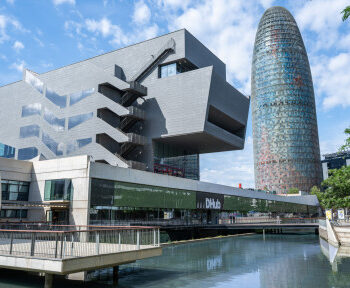
The Disseny Hub Barcelona (DHub) is the reference public facility for the recognition and promotion of the Creative Industries, as well as for the dissemination of design heritage and culture.

DHub deploys promotion policies in the fields of design, architecture, urban planning, innovation and technology. This is a space that welcomes and supports the city’s creative talent, working with training centers, creators and business environments on a local and international scale.

The DHub is the headquarters of Barcelona Design Museum, with the dual function of conserving, interpreting and exhibiting its holdings and developing a proposal for exhibitions and activities around design.

These objectives are translated into a program that aims to disseminate and bring these disciplines closer to the public through exhibitions and activities for all audiences, but which also seeks to boost and promote the sector through a program that includes conferences, festivals and awards together with that of entities based at the DHub: Barcelona Creativity & Design Foundation, the Arts and Design Promotion (FAD), the Art Directors Club of Europe (ADCE), the Association for the furniture study and the El Clot-Josep Benet Library.

The DHub’s role in education and research is also fundamental, through a close link with universities and an extensive program dedicated to schools, as well as the work done from the Library and Archive of Design, consultation and research space specialized in decorative arts and design.

ColoniaGuell HOTSPOT

Colonia Guell Lab

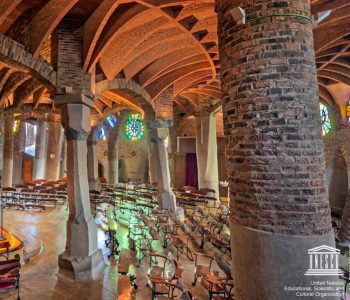
Colònia Güell is a former industrial village located about 20 minutes from Barcelona. Founded in 1890 by entrepreneur Eusebi Güell, it was built to provide a higher quality of life for textile workers and is now a celebrated open-air museum of Catalan Modernisme

The Gaudí Crypt: a UNESCO World Heritage site. Antoni Gaudí used this church as a “laboratory” to test architectural innovations—such as catenary arches and hyperbolic parabolas—that he would later apply to the Sagrada Família. 

  • Stereostatic Model: Gaudí invented a complex system of hanging strings and weights (poly-funicular model) to calculate the gravity and pressure of arches. By photographing this inverted model, he designed catenary arches that didn’t require external buttresses.
  • Hyperbolic Paraboloids: He was the first to use these warped mathematical shapes in walls and vaults, allowing for curved, organic structures that integrated into the hillside.
  • Material Innovation: He pioneered the use of recycled industrial waste, such as iron slag from the nearby factory and over-fired “waste” bricks, to create textured, cost-effective surfaces. 
Torribera HOTSPOT

Recinte Torribera

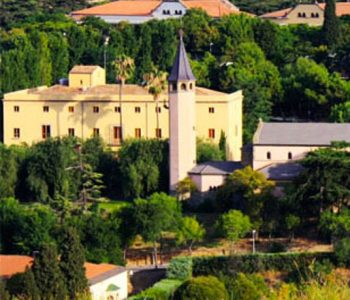
Recinte Torribera is a large, multi-use complex located just north of Barcelona. Originally a medieval farmhouse (masia) rebuilt in the 18th century, it was transformed in the early 20th century into a landmark “mental clinic” and has since evolved into a major university and research hub.

Key Areas and Functions

  • Torribera Food and Nutrition Campus (University of Barcelona): This is the site’s most prominent current feature. It is a specialized campus entirely dedicated to food sciences, nutrition, and gastronomy. It houses research labs, the UB-Bullipèdia Unit (a collaboration with chef Ferran Adrià), and various bachelor’s and master’s programs.
  • Architectural Heritage: The complex is an exceptional example of Novecentista architecture. It was designed by renowned architects Rafael Masó and Josep Maria Pericas, featuring symmetric pavilions, gardens, and a distinctive neo-Gothic church with a black tile pinnacle.
  • Healthcare and Research: The site still maintains a healthcare role as home to the Centre Dr. Emili Mira, a psychiatric and mental health facility managed by Parc de Salut Mar.
  • Nature and Sports: Bordering the Serralada de Marina Natural Park, the enclosure offers green spaces for walking and relaxation. It also includes the Torribera Sports Complex, which features swimming pools, tennis courts, and archery facilities.