Astrazeneca Barcelona Hub

AstraZeneca Global Hub

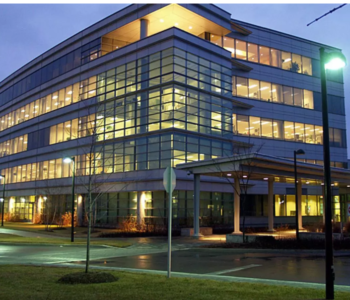
The AstraZeneca Global Hub in Barcelona is one of Europe’s largest and most significant centers for biomedical research and digital innovation. Launched in 2023, it serves as a central point for accelerating the development of next-generation treatments across the company’s main therapeutic areas. 

Core Mission & Operations

  • Biomedical Innovation: The hub focuses on developing new molecules and therapies using a model that combines traditional science with Data Science, Artificial Intelligence (AI), and precision medicine.
  • Therapeutic Areas: Research projects target six key fields: Oncology, Cardiovascular, Renal and Metabolism, Respiratory and Immunology, Vaccines and Immunotherapies, and Rare Diseases (supported by its subsidiary Alexion).
  • Clinical Excellence: The center drives over 380 research projects and 190 clinical trials. 

Strategic Investment & Workforce

  • Massive Investment: AstraZeneca has committed €1.3 billion to the hub through 2027.
  • Growing Talent: The hub currently employs approximately 1,600 professionals from 62 nationalities, with plans to reach 2,000 employees by late 2025.
  • Language: As a global innovation center, English is the primary working language.
Intel Barcelona Hub

Intel Barcelona Hub

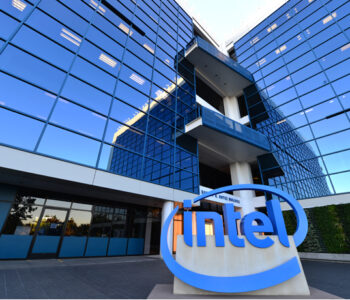
Intel has turned Barcelona into a strategic cornerstone for its European strategy, focusing on two major high-tech pillars: Next-Generation Microchips and Autonomous Driving.

1. The Semiconductor Design Center (Zetta-Scale)

In collaboration with the Barcelona Supercomputing Center (BSC), Intel has invested €400 million over ten years to create a laboratory for high-performance computing.

  • The Mission: Designing Zetta-scale processors. These are chips 1,000 times faster than today’s most powerful supercomputers.
  • RISC-V Technology: The hub is a pioneer in using RISC-V, an open-source architecture that aims to reduce Europe’s dependence on proprietary American or British chip technologies (like ARM or x86).
  • Sovereignty: This project is part of the “PERTE Chip” initiative, aimed at making the EU a global leader in semiconductor manufacturing.

2. Mobileye (Autonomous Driving Hub)

Intel’s subsidiary Mobileye (the world leader in computer vision for cars) also considers Barcelona a key “living lab.”

  • Autonomous Fleets: Mobileye uses Barcelona’s streets to test its Robotaxi technology and autonomous mapping (REM).
  • Infrastructure: They work closely with the city council to integrate AI into traffic management and urban safety.
Microsoft Barcelona Hub

Microsoft Barcelona Hub

Microsoft has established Barcelona as a major strategic point for its global operations, primarily through two specialized centers: the AI & Quantum Hub and its Sales & Digital Transformation Hub.

1. AI Research & Development Hub

In 2021, Microsoft chose Barcelona to host one of its most important European R&D centers.

  • Focus: This hub is dedicated to Artificial Intelligence (AI) and Deep Learning, specifically focusing on enhancing user experiences through technologies like Microsoft Search (Bing) and Azure.
  • Quantum Computing: In collaboration with local institutions like the ICFO (Institute of Photonic Sciences), the hub also works on long-term quantum research and secure communications.
  • Impact: It is part of Microsoft’s WebXT (Web Experience & Technology) division, meaning the code written in Barcelona affects millions of global users daily.

2. Digital Sales & Solutions Hub

The Barcelona office also serves as a massive Digital Sales Hub for the EMEA region (Europe, Middle East, and Africa). 

  • Mission: It supports businesses in their migration to the Cloud (Azure) and the implementation of Microsoft 365 and Dynamics 365.
  • Talent: It is a highly multicultural site, employing over hundreds of professionals representing dozens of nationalities. English is the primary working language.

BSC

BSC Barcelona Supercomputing Center

The Barcelona Supercomputing Center (BSC-CNS) is Spain’s national supercomputing facility and a leading research institution in Europe. Established in 2005, it is most famous for housing the MareNostrum supercomputer.

A Unique Setting: High-Tech in a Chapel

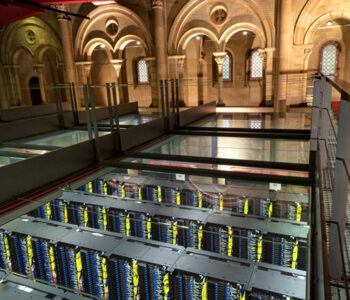
One of the BSC’s most striking features is its location. The supercomputer is housed inside the Torre Girona, a 19th-century de-consecrated chapel on the Campus Nord of the Polytechnic University of Catalonia (UPC). Seeing the glowing glass box of MareNostrum inside the classic stone arches of the chapel makes it one of the most beautiful data centers in the world.

MareNostrum 5

The latest iteration, MareNostrum 5, is among the most powerful supercomputers globally. It is designed to support a wide range of scientific fields, with a specific focus on boosting Artificial Intelligence (AI) and European chip technology.

With a team of over 1,300 experts, the center focuses on:

  • Life Sciences: Personalizing medicine and simulating drug interactions.
  • Earth Sciences: Modeling climate change and predicting air quality.
  • Computer Sciences: Designing the next generation of European processors.
  • Engineering: Simulating complex fluid dynamics for aircraft or city infrastructure.
IBM-client-center

IBM Client Innovation Center

IBM has a significant presence in Barcelona, anchored by its Client Innovation Center (CIC) and its specialized Quantum Computing and AI collaborations. Like many other tech giants, it centers its operations in the 22@ tech district.

The Barcelona CIC is part of a global network of delivery centers that provide high-end technical consulting and software development.

  • Mission: It focuses on the rapid development and implementation of digital solutions for international clients, primarily using Hybrid Cloud and Artificial Intelligence.
  • Specializations: The teams here are experts in IBM Watson (AI), automation, cybersecurity, and migrating legacy systems to the cloud (Red Hat OpenShift).
  • Workforce: It is a multilingual hub where English is the standard for global projects, though it also supports the local Spanish and Catalan markets.

The Quantum & AI Hub (BSC Collaboration)

IBM’s relationship with Barcelona is unique due to its deep partnership with the Barcelona Supercomputing Center (BSC).

  • Strategic Node: Barcelona is a key location for IBM’s quantum research in Europe. The BSC was selected to host one of the first IBM Quantum Spanish Hubs, providing local companies and researchers access to IBM’s quantum fleet via the cloud.
  • R&D Focus: Joint teams work on “Discovery Science,” using AI and quantum computing to tackle complex problems in materials science, climate change, and healthcare.
CISCO

Cisco Barcelona Hub

Cisco’s Barcelona Hub is a premier center for innovation and the company’s first Giga-Scale Semiconductor Design Center in the European Union. Located in the 22@ tech district, it serves as a critical node for Cisco’s global engineering and R&D strategy.  

1. The Semiconductor & Chip Design Center

This is one of Cisco’s most ambitious European projects.

  • Mission: It focuses on the design and prototyping of next-generation semiconductors. This initiative is part of the “PERTE Chip” program, aiming to strengthen Europe’s digital sovereignty in the microchip industry.
  • Technology: Teams here work on advanced silicon photonics and high-performance chips that power the world’s most complex data centers and internet infrastructures.

2. Co-Innovation Center (Ca l’Alier).

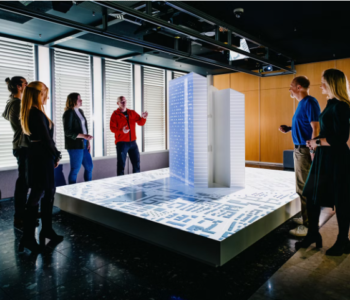
Cisco also operates a Co-Innovation Center located in a renovated 19th-century factory.

  • Focus: This site is dedicated to Smart Cities, Internet of Things (IoT), and Cybersecurity. It acts as a collaborative space where Cisco engineers work alongside startups, researchers, and public institutions to build urban technology solutions.
  • Strategic Role: It is one of only a handful of such centers globally, focusing on digitizing critical infrastructure and energy efficiency.

The Barcelona sites employ several hundred highly skilled engineers, developers, and data scientists. As with their global operations, English is the primary professional language.

Bandai Namco Mobile

Bandai Namco Mobile

Bandai Namco Mobile (BNM) is the global hub for Bandai Namco’s mobile gaming business outside of Japan. Established in 2020, the Barcelona studio was created to unify the company’s western mobile development, marketing, and publishing efforts.

Hub Mission & Operations

Unlike their traditional console business, this hub is specifically designed for the Free-to-Play (F2P) mobile market.

  • Full Lifecycle Management: The Barcelona team handles everything from initial game concepts and development to global marketing and “Live Ops” (ongoing game updates).
  • Innovation Center: The hub focuses on creating high-quality mobile experiences for both world-famous Bandai Namco IPs (like PAC-MAN, Tekken, or Dragon Ball) and completely new, original titles.
  • Global Publishing: It acts as the nerve center for publishing Bandai Namco mobile titles across EMEA (Europe, Middle East, and Africa) and North American markets.

It is a highly international environment with over 100 experts from all over the world. English is the official working language.

BNM is known for its “startup within a giant” culture, emphasizing flat hierarchies and creative autonomy within the larger Bandai Namco Entertainment group.

ubisoft-hub

Ubisoft Barcelona Hub

Ubisoft Barcelona is one of the oldest and most established studios within the Ubisoft global network. While it originally started as a production house, it has evolved into a major international hub for AAA game development and mobile gaming innovation.

The Barcelona hub is split into two distinct areas of expertise:

  • AAA Console Development: The studio is a critical co-development partner for Ubisoft’s biggest franchises. They have contributed heavily to titles like Assassin’s Creed Valhalla, Far Cry 6, Tom Clancy’s Rainbow Six Siege, and Beyond Good & Evil 2. They specialize in level design, technical art, and world-building.
  • Ubisoft Barcelona Mobile: This specialized branch focuses on the growing mobile market. They are responsible for successful titles like Hungry Shark World and Monster Legends, focusing on “Free-to-Play” mechanics and live-service operations.
  • Technology & Innovation: The hub also hosts teams working on Ubisoft’s proprietary game engines (like Anvil and Snowdrop) and specialized R&D for virtual reality (VR), having developed Star Trek: Bridge Crew.

Key Details

  • Workforce: It houses over 200 professionals from over 30 nationalities. Like the other hubs you’ve mentioned, English is the primary language used for global collaboration.
  • Studio Culture: The office is known for its creative “open space” environment, featuring high-end development kits, motion capture facilities, and playtesting zones.

Lidl-hub

Lidl International Hub

Lidl’s International Hub in Barcelona is a massive technology and digital powerhouse located in the 22@ tech district. It serves as the global center for the company’s digital transformation, specifically focusing on e-commerce, customer loyalty (Lidl Plus), and CRM systems.

Core Operations: Retail & MSCRM

The hub is divided into specialized units that support Lidl’s operations in 32 countries:

  • Lidl Digital (Retail Tech): This team builds and manages the global e-commerce platform. They handle everything from the online shop infrastructure to the logistics software that ensures products reach customers across Europe.
  • MSCRM (Microsoft Customer Relationship Management): This is a critical unit dedicated to managing customer data and interactions at scale. They use Microsoft Dynamics 365 to power Lidl’s marketing automation and personalized customer journeys.
  • Lidl Plus: The development and optimization of the Lidl Plus loyalty app—one of the most downloaded retail apps in Europe—is largely managed from this hub.
  • Data & Analytics: The hub employs data scientists to analyze consumer behavior, helping the company optimize pricing, stock, and promotional offers globally.

It houses over 500 specialists, including software engineers, cloud architects, and CRM experts. It is a highly international environment where English is the primary language of business.

revolut-techhub

Revolut Barcelona Hub

Revolut’s Barcelona Hub is one of the company’s largest and most strategic European offices. While Revolut has moved toward a “flexible working” model, Barcelona remains a massive talent center, specifically for Southern European operations and global support functions.

Hub Overview

  • Expansion Hub: Barcelona was established as a key site to drive Revolut’s growth in the Spanish market, where it now has over 3 million customers.
  • Multicultural Workforce: The hub employs over 600 people (and growing) of various nationalities. It is a major center for Operations, Sales, Customer Support, and Compliance.
  • Key Functions: Revolut Barcelona Hub is heavily focused on Revolut Business sales, specialized customer support, and “Know Your Customer” (KYC) operations.

Office Style: Following their “RevRemote” policy, the office serves as a collaboration hub where employees can choose to work in-person or remotely, focusing on team-building and creative workshops rather than mandatory daily attendance.

Why Barcelona?

Revolut chose Barcelona to tap into the city’s high density of multilingual talent. This allows them to provide native-level support and sales services across multiple European languages from a single location.