Microsoft Barcelona Hub

Microsoft Barcelona Hub

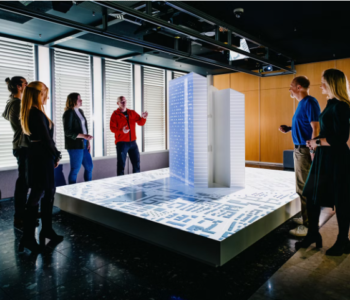
Microsoft has established Barcelona as a major strategic point for its global operations, primarily through two specialized centers: the AI & Quantum Hub and its Sales & Digital Transformation Hub.

1. AI Research & Development Hub

In 2021, Microsoft chose Barcelona to host one of its most important European R&D centers.

  • Focus: This hub is dedicated to Artificial Intelligence (AI) and Deep Learning, specifically focusing on enhancing user experiences through technologies like Microsoft Search (Bing) and Azure.
  • Quantum Computing: In collaboration with local institutions like the ICFO (Institute of Photonic Sciences), the hub also works on long-term quantum research and secure communications.
  • Impact: It is part of Microsoft’s WebXT (Web Experience & Technology) division, meaning the code written in Barcelona affects millions of global users daily.

2. Digital Sales & Solutions Hub

The Barcelona office also serves as a massive Digital Sales Hub for the EMEA region (Europe, Middle East, and Africa). 

  • Mission: It supports businesses in their migration to the Cloud (Azure) and the implementation of Microsoft 365 and Dynamics 365.
  • Talent: It is a highly multicultural site, employing over hundreds of professionals representing dozens of nationalities. English is the primary working language.
BSC

BSC Barcelona Supercomputing Center

The Barcelona Supercomputing Center (BSC-CNS) is Spain’s national supercomputing facility and a leading research institution in Europe. Established in 2005, it is most famous for housing the MareNostrum supercomputer.

A Unique Setting: High-Tech in a Chapel

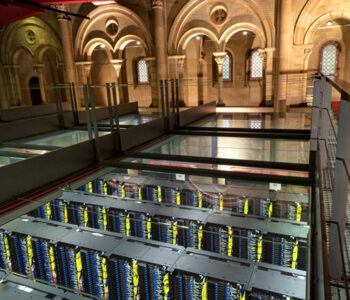
One of the BSC’s most striking features is its location. The supercomputer is housed inside the Torre Girona, a 19th-century de-consecrated chapel on the Campus Nord of the Polytechnic University of Catalonia (UPC). Seeing the glowing glass box of MareNostrum inside the classic stone arches of the chapel makes it one of the most beautiful data centers in the world.

MareNostrum 5

The latest iteration, MareNostrum 5, is among the most powerful supercomputers globally. It is designed to support a wide range of scientific fields, with a specific focus on boosting Artificial Intelligence (AI) and European chip technology.

With a team of over 1,300 experts, the center focuses on:

  • Life Sciences: Personalizing medicine and simulating drug interactions.
  • Earth Sciences: Modeling climate change and predicting air quality.
  • Computer Sciences: Designing the next generation of European processors.
  • Engineering: Simulating complex fluid dynamics for aircraft or city infrastructure.
IBM-client-center

IBM Client Innovation Center

IBM has a significant presence in Barcelona, anchored by its Client Innovation Center (CIC) and its specialized Quantum Computing and AI collaborations. Like many other tech giants, it centers its operations in the 22@ tech district.

The Barcelona CIC is part of a global network of delivery centers that provide high-end technical consulting and software development.

  • Mission: It focuses on the rapid development and implementation of digital solutions for international clients, primarily using Hybrid Cloud and Artificial Intelligence.
  • Specializations: The teams here are experts in IBM Watson (AI), automation, cybersecurity, and migrating legacy systems to the cloud (Red Hat OpenShift).
  • Workforce: It is a multilingual hub where English is the standard for global projects, though it also supports the local Spanish and Catalan markets.

The Quantum & AI Hub (BSC Collaboration)

IBM’s relationship with Barcelona is unique due to its deep partnership with the Barcelona Supercomputing Center (BSC).

  • Strategic Node: Barcelona is a key location for IBM’s quantum research in Europe. The BSC was selected to host one of the first IBM Quantum Spanish Hubs, providing local companies and researchers access to IBM’s quantum fleet via the cloud.
  • R&D Focus: Joint teams work on “Discovery Science,” using AI and quantum computing to tackle complex problems in materials science, climate change, and healthcare.
EURECAT HOTSPOT

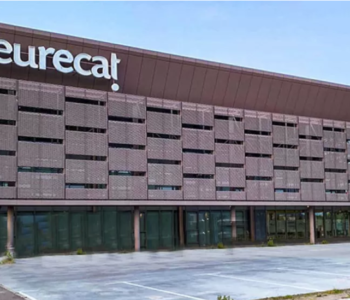
Eurecat

Eurecat is the leading technology center in Catalonia and the second-largest private research organization in Southern Europe. It serves as a bridge between scientific knowledge and industrial application to boost business competitiveness.

A provider of applied R&D, technological services, and specialized training for companies.

Main Services

Training: Highly specialized professional courses via Eurecat AcademyOver 650-700 professionals, an annual income of approximately €50–52M, and a portfolio of over 150 patents.

Applied R&D: Custom innovation projects for SMEs and large corporations.

Infrastructure: Access to more than 20 specialized laboratories and pilot plants for testing and prototyping.

ICFO HOTSPOT

ICFO

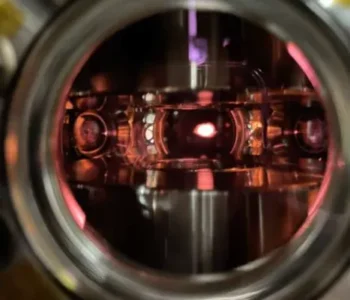
ICFO (The Institute of Photonic Sciences) is a world-class research center located in Castelldefels, just outside Barcelona. It is dedicated to the science and technology of light (photonics) and is widely considered one of the top research institutions in Europe. 

Key Mission and Research

Founded in 2002 by the Government of Catalonia and the Polytechnic University of Catalonia (UPC), ICFO focuses on using light to solve global challenges in: 

  • Health: Developing advanced imaging and laser tools for non-invasive medical diagnostics and therapies.
  • Energy: Researching high-efficiency solar cells and sustainable energy harvesting.
  • Information Technology: Leading innovations in Quantum Computing, cryptography, and ultra-fast optical communications. 

Innovation and Industry

ICFO is highly focused on “knowledge frontier” research that leads to real-world applications:

  • KTT (Knowledge & Technology Transfer): The institute has a dedicated unit to bridge the gap between lab research and the market.
  • Spin-offs: ICFO has launched over 15 startups (such as QusideLuxQuanta, and Sixsenso) specializing in quantum security, environmental monitoring, and biomedical devices.
  • Graphene Hub: It hosts the Graphene Center, exploring the “wonder material” for flexible electronics and next-gen sensors.