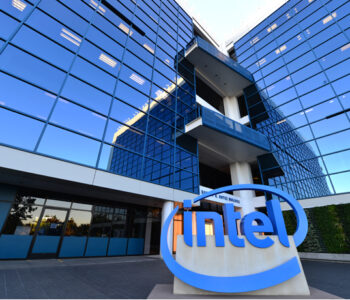
Intel Barcelona Hub

Intel Barcelona Hub

Intel has turned Barcelona into a strategic cornerstone for its European strategy, focusing on two major high-tech pillars: Next-Generation Microchips and Autonomous Driving.

1. The Semiconductor Design Center (Zetta-Scale)

In collaboration with the Barcelona Supercomputing Center (BSC), Intel has invested €400 million over ten years to create a laboratory for high-performance computing.

  • The Mission: Designing Zetta-scale processors. These are chips 1,000 times faster than today’s most powerful supercomputers.
  • RISC-V Technology: The hub is a pioneer in using RISC-V, an open-source architecture that aims to reduce Europe’s dependence on proprietary American or British chip technologies (like ARM or x86).
  • Sovereignty: This project is part of the “PERTE Chip” initiative, aimed at making the EU a global leader in semiconductor manufacturing.

2. Mobileye (Autonomous Driving Hub)

Intel’s subsidiary Mobileye (the world leader in computer vision for cars) also considers Barcelona a key “living lab.”

  • Autonomous Fleets: Mobileye uses Barcelona’s streets to test its Robotaxi technology and autonomous mapping (REM).
  • Infrastructure: They work closely with the city council to integrate AI into traffic management and urban safety.

Microsoft Barcelona Hub

Microsoft Barcelona Hub

Microsoft has established Barcelona as a major strategic point for its global operations, primarily through two specialized centers: the AI & Quantum Hub and its Sales & Digital Transformation Hub.

1. AI Research & Development Hub

In 2021, Microsoft chose Barcelona to host one of its most important European R&D centers.

  • Focus: This hub is dedicated to Artificial Intelligence (AI) and Deep Learning, specifically focusing on enhancing user experiences through technologies like Microsoft Search (Bing) and Azure.
  • Quantum Computing: In collaboration with local institutions like the ICFO (Institute of Photonic Sciences), the hub also works on long-term quantum research and secure communications.
  • Impact: It is part of Microsoft’s WebXT (Web Experience & Technology) division, meaning the code written in Barcelona affects millions of global users daily.

2. Digital Sales & Solutions Hub

The Barcelona office also serves as a massive Digital Sales Hub for the EMEA region (Europe, Middle East, and Africa). 

  • Mission: It supports businesses in their migration to the Cloud (Azure) and the implementation of Microsoft 365 and Dynamics 365.
  • Talent: It is a highly multicultural site, employing over hundreds of professionals representing dozens of nationalities. English is the primary working language.
IBM-client-center

IBM Client Innovation Center

IBM has a significant presence in Barcelona, anchored by its Client Innovation Center (CIC) and its specialized Quantum Computing and AI collaborations. Like many other tech giants, it centers its operations in the 22@ tech district.

The Barcelona CIC is part of a global network of delivery centers that provide high-end technical consulting and software development.

  • Mission: It focuses on the rapid development and implementation of digital solutions for international clients, primarily using Hybrid Cloud and Artificial Intelligence.
  • Specializations: The teams here are experts in IBM Watson (AI), automation, cybersecurity, and migrating legacy systems to the cloud (Red Hat OpenShift).
  • Workforce: It is a multilingual hub where English is the standard for global projects, though it also supports the local Spanish and Catalan markets.

The Quantum & AI Hub (BSC Collaboration)

IBM’s relationship with Barcelona is unique due to its deep partnership with the Barcelona Supercomputing Center (BSC).

  • Strategic Node: Barcelona is a key location for IBM’s quantum research in Europe. The BSC was selected to host one of the first IBM Quantum Spanish Hubs, providing local companies and researchers access to IBM’s quantum fleet via the cloud.
  • R&D Focus: Joint teams work on “Discovery Science,” using AI and quantum computing to tackle complex problems in materials science, climate change, and healthcare.
CISCO

Cisco Barcelona Hub

Cisco’s Barcelona Hub is a premier center for innovation and the company’s first Giga-Scale Semiconductor Design Center in the European Union. Located in the 22@ tech district, it serves as a critical node for Cisco’s global engineering and R&D strategy.  

1. The Semiconductor & Chip Design Center

This is one of Cisco’s most ambitious European projects.

  • Mission: It focuses on the design and prototyping of next-generation semiconductors. This initiative is part of the “PERTE Chip” program, aiming to strengthen Europe’s digital sovereignty in the microchip industry.
  • Technology: Teams here work on advanced silicon photonics and high-performance chips that power the world’s most complex data centers and internet infrastructures.

2. Co-Innovation Center (Ca l’Alier).

Cisco also operates a Co-Innovation Center located in a renovated 19th-century factory.

  • Focus: This site is dedicated to Smart Cities, Internet of Things (IoT), and Cybersecurity. It acts as a collaborative space where Cisco engineers work alongside startups, researchers, and public institutions to build urban technology solutions.
  • Strategic Role: It is one of only a handful of such centers globally, focusing on digitizing critical infrastructure and energy efficiency.

The Barcelona sites employ several hundred highly skilled engineers, developers, and data scientists. As with their global operations, English is the primary professional language.

IRP Systems Hub

IRP Systems Europe

IRP Systems recently established its European R&D Headquarters in Barcelona, Spain. This Israeli-based company is a leading provider of high-performance electric powertrain solutions, specifically software-defined motor controllers for electric vehicles.

The Barcelona Europe Hub

  • Strategic Role: The Barcelona office serves as the company’s business and R&D center for Europe. It provides local customer support and manages design-win activities across the continent.
  • Local Ecosystem: IRP Systems is a member of the CIAC (Clúster de la Indústria d’Automoció de Catalunya), collaborating with major local players like SEAT and B-Tech to drive clean mobility innovation in the region.
  • Key Projects: The hub recently signed a commercial agreement with Silence Urban Mobility, Europe’s leading urban mobility OEM based in Barcelona, to provide advanced Dynamic 6 motor controllers for their electric platforms.
Airbus Geotech

Airbus GeoTech

Airbus GeoTech is a specialized digital geospatial hub and subsidiary of Airbus Space Digital. While Airbus has massive aerospace hubs in Toulouse, its GeoTech division is primarily headquartered in Barcelona, Spain.

Key Focus Areas

  • Stratospheric Observation: A world leader in HAPS (High Altitude Platform Station) technology. They developed StratObserver, an advanced optical system capable of real-time video and 18cm resolution from the stratosphere.
  • Geospatial Intelligence: Specialized in transforming satellite and drone imagery into actionable 2D and 3D mapping data for urban planning and infrastructure development.
  • Aeronautical Products: Development of electronic Terrain Obstacle Databases (eTOD) and Airport Mapping Data Bases (AMDB).

Locations

  • Barcelona Headquarters: Main center for R&D, engineering, and geospatial production.
  • Madrid Office: Located in Getafe, providing additional support for geospatial and aerospace engineering.
  • Toulouse (Parent Hub): While not the primary “GeoTech” site, Airbus Defence and Space Toulouse remains the global center for satellite manufacturing and mission control.

Notable Projects

  • StratObserver: A project utilizing the Zephyr high-altitude aircraft to provide persistent surveillance over specific regions for months at a time.
  • Digital Cartography: Over 30 years of experience delivering vector maps, urban datasets, and topographic databases to more than 200 international customers.
SEAT:CODE

SEAT:CODE

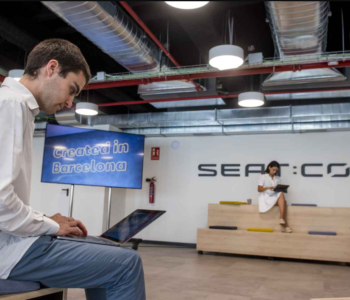
SEAT:CODE (Center of Digital Excellence) is the digital innovation hub and software development center of the automotive brand SEAT S.A.. Founded in 2019, it is located in the 22@ tech district of Barcelona. 

Core Mission

SEAT:CODE drives the digital transformation of SEAT and CUPRA, shifting the company from a traditional car manufacturer to a digital mobility service provider. It employs over 280 digital experts from 14+ nationalities. 

Key Solutions and Projects

  • Giravolta: A proprietary Software as a Service (SaaS) mobility platform that allows cities and companies to manage 100% digital vehicle fleets, including car-sharing and bike-sharing.
  • Connected Car Apps: Development of the My SEAT and My CUPRA apps, which centralize charging management, vehicle data, and remote connectivity services.
  • SEAT MÓ: Managing the digital infrastructure for micromobility services, such as electric scooters and motor-sharing in Barcelona.
  • Industrial AI: Utilizing big data and artificial intelligence to optimize factory logistics, supply chains, and predictive maintenance for production lines.
Schneider Electric Digital Hub Barcelona

Schneider Electric Digital Hub Barcelona

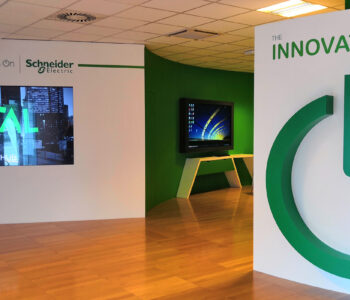
Schneider Electric Digital Hub Barcelona is a major international center focusing on digital transformation, energy management, and industrial automation. Supporting over 700 people, the hub specializes in AI, cybersecurity, cloud computing, and e-commerce, aimed at driving sustainability and Industry 4.0 innovations. 

Key Aspects of the Barcelona Innovation/Digital Hub

  • Digital Transformation Core: The hub focuses on developing EcoStruxure™ platforms, AI integration, and managing global data and cloud projects.
  • Focus Areas: Key initiatives include smart city technologies, data center management, and building efficiency.
  • Talent Hub: With over 700 employees, the hub serves as a key European hub for IT infrastructure, CRM, and cybersecurity experts.
  • Customer & Innovation Lab: This facility provides personalized experiences and expert consultation to test and validate products for customers. 

Visitor and Business Opportunities 

  • In-person Visits: The Customer & Innovation Lab Europe in Barcelona offers personalized, guided tours to explore new products and technologies.
  • Virtual Experiences: Schneider provides virtual tours and 3D experiences, allowing users to interact with energy management technology remotely.
  • Innovation Summits: The Barcelona office is heavily involved in hosting major industry summits, bringing together partners to discuss energy efficiency.

The hub serves as a central point of reference for the company’s global operations, particularly in cybersecurity strategy, managing international projects from Barcelona.

BCN_OS_EXO-Smartcity

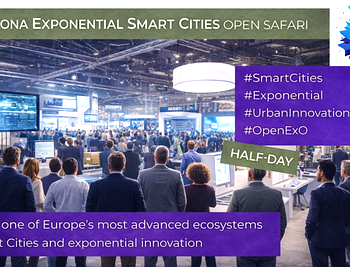
Barcelona Exponential SmartCity Open Innovation Safari

Explore one of Europe’s most advanced ecosystems of Smart Cities and exponential innovation

Location: Barcelona – Themes: Smart Cities / Exponential Innovation / Urban Transformation – Duration: Half Day

The Barcelona Exponential Smart Cities Open Innovation Safari is a half-day immersive experience designed for professionals who want to explore how cities are evolving through exponential technologies and new innovation models.

Led by Certified Innovation Safari Sherpa Francesc Saldaña, this Safari introduces explorers to the Smart Cities ecosystem of Barcelona, with a unique immersion inside the Smart City Expo World Congress environment, where global leaders, startups and institutions showcase the future of urban innovation.

During the experience, explorers will discover how exponential organizations apply new technologies, data and innovation frameworks to transform cities, services and infrastructures at scale.

Explorers will explore topics such as:

  • exponential innovation and organizations
  • smart cities transformation
  • urban mobility and digital infrastructure
  • data-driven city governance

Innovation Safaris allow professionals to experience innovation where it actually happens.

The experience

The Safari combines structured learning with real ecosystem exploration and networking opportunities. Explorers will experience key elements of exponential innovation in the Smart Cities context:

  • Exponential Transformation Workshop – Discover the key attributes to create exponential organizations using real examples, tools and frameworks.
  • Smart City Expo World Congress Tour – Guided visit to main exhibitors and startups showcasing cutting-edge urban innovation solutions.
  • Startups & Networking Session – Meet innovators, startups and other explorers to exchange insights and opportunities.

Participants will:

  • explore real Smart City innovation environments
  • interact with startups, corporates and global ecosystem players
  • understand how exponential thinking is applied to cities
  • join discussions on mobility, governance, urban environment and digital transformation
  • connect with other explorers and innovation leaders

This immersive approach helps participants better understand how Smart Cities ecosystems operate in practice.

What explorers will gain

Explorers will Learn, Design and Engage by:

  • discovering key attributes of exponential organizations
  • understanding how Smart Cities evolve through technology and data
  • connecting with global innovation players and startups
  • generating ideas and inspiration for new urban solutions and business models

Who Should Join

  • corporate innovation leaders
  • public sector and city managers
  • urban planners and infrastructure professionals
  • entrepreneurs and startup founders
  • technology and digital transformation leaders

Participants from different sectors are encouraged to join and share perspectives.

Limited group to ensure a high-quality exploration experience.

ca l'alier

Barcelona Urban Lab

Barcelona Urban Lab uses the city as a live testing ground for innovative urban projects. It provides companies with real-world public spaces to pilot new technologies—such as smart sensors for parking or advanced mobility solutions—before they are commercialized. Backed by the Barcelona City Council, this initiative aims to promote economic growth, improve public services, and transform the city into a hub for smart technology and sustainability. 

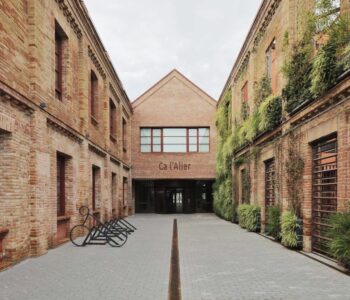
Ca l’Alier is a leading urban innovation center located in Barcelona’s Poblenou district. Housed in a beautifully restored 19th-century textile factory, it serves as a collaborative hub where technology companies, startups, and the city council work together to develop smart city solutions. It is a symbol of the city’s commitment to sustainability and digital transformation.

Key Aspects:

  • Location: Primarily focused in areas like the 22@ innovation district.
  • Objective: To overcome regulatory barriers for startups and companies testing innovative products in natural environments.