BSC

BSC Barcelona Supercomputing Center

The Barcelona Supercomputing Center (BSC-CNS) is Spain’s national supercomputing facility and a leading research institution in Europe. Established in 2005, it is most famous for housing the MareNostrum supercomputer.

A Unique Setting: High-Tech in a Chapel

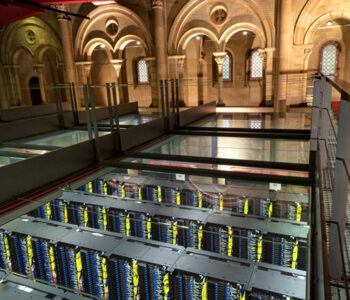
One of the BSC’s most striking features is its location. The supercomputer is housed inside the Torre Girona, a 19th-century de-consecrated chapel on the Campus Nord of the Polytechnic University of Catalonia (UPC). Seeing the glowing glass box of MareNostrum inside the classic stone arches of the chapel makes it one of the most beautiful data centers in the world.

MareNostrum 5

The latest iteration, MareNostrum 5, is among the most powerful supercomputers globally. It is designed to support a wide range of scientific fields, with a specific focus on boosting Artificial Intelligence (AI) and European chip technology.

With a team of over 1,300 experts, the center focuses on:

  • Life Sciences: Personalizing medicine and simulating drug interactions.
  • Earth Sciences: Modeling climate change and predicting air quality.
  • Computer Sciences: Designing the next generation of European processors.
  • Engineering: Simulating complex fluid dynamics for aircraft or city infrastructure.
I2CAT

i2CAT

The i2CAT Foundation is a non-profit research and innovation centre based in Barcelona that promotes R&D activities in the field of advanced Internet architectures, applications, and services. It acts as a strategic partner for the public sector and businesses, driving global connectivity and technology transfer in areas such as 6GArtificial Intelligence, and the New Space Economy.

Its main mission is to bridge the gap between academic research and the business sector through digital innovation.

Leads numerous European projects and initiatives aimed at improving social and territorial digital transformation.

DHub Barcelona

DHub Barcelona

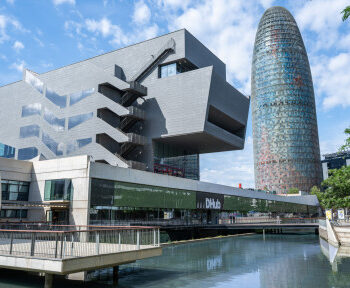
The Disseny Hub Barcelona (DHub) is the reference public facility for the recognition and promotion of the Creative Industries, as well as for the dissemination of design heritage and culture.

DHub deploys promotion policies in the fields of design, architecture, urban planning, innovation and technology. This is a space that welcomes and supports the city’s creative talent, working with training centers, creators and business environments on a local and international scale.

The DHub is the headquarters of Barcelona Design Museum, with the dual function of conserving, interpreting and exhibiting its holdings and developing a proposal for exhibitions and activities around design.

These objectives are translated into a program that aims to disseminate and bring these disciplines closer to the public through exhibitions and activities for all audiences, but which also seeks to boost and promote the sector through a program that includes conferences, festivals and awards together with that of entities based at the DHub: Barcelona Creativity & Design Foundation, the Arts and Design Promotion (FAD), the Art Directors Club of Europe (ADCE), the Association for the furniture study and the El Clot-Josep Benet Library.

The DHub’s role in education and research is also fundamental, through a close link with universities and an extensive program dedicated to schools, as well as the work done from the Library and Archive of Design, consultation and research space specialized in decorative arts and design.

ca l'alier

Barcelona Urban Lab

Barcelona Urban Lab uses the city as a live testing ground for innovative urban projects. It provides companies with real-world public spaces to pilot new technologies—such as smart sensors for parking or advanced mobility solutions—before they are commercialized. Backed by the Barcelona City Council, this initiative aims to promote economic growth, improve public services, and transform the city into a hub for smart technology and sustainability. 

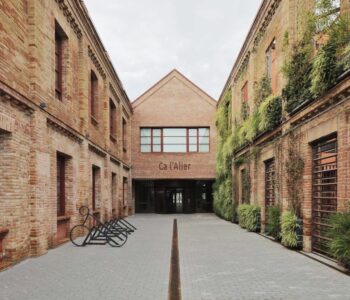
Ca l’Alier is a leading urban innovation center located in Barcelona’s Poblenou district. Housed in a beautifully restored 19th-century textile factory, it serves as a collaborative hub where technology companies, startups, and the city council work together to develop smart city solutions. It is a symbol of the city’s commitment to sustainability and digital transformation.

Key Aspects:

  • Location: Primarily focused in areas like the 22@ innovation district.
  • Objective: To overcome regulatory barriers for startups and companies testing innovative products in natural environments.
ALICIA Foundation

ALICIA Foundation

The Alícia Foundation is a research center with a social mission, devoted to technological innovation in cuisine, the improvement of eating habits, and the preservation of culinary heritage.

  • Health: Creating dietary solutions for people with specific nutritional needs or illnesses (such as diabetes or cancer).
  • Innovation: Developing new techniques and products to improve the quality of food and industrial processes.
  • Territory: Promoting local products and traditional culinary knowledge to ensure sustainability and cultural identity.

Its goal is to ensure that everyone eats better—meaning food that is healthy, sustainable, and pleasurable.

IRTA

IRTA

The Institute of Agrifood Research and Technology (IRTA) is a public research institute owned by the Government of Catalonia, specialized in the agrifood sector. It aims to modernize and boost the competitiveness of the industry through scientific innovation.

While headquartered in Barcelona (Torre Marimon), it has a network of research centers, experimental farms, and labs across Catalonia (Lleida, Tarragona, Girona, etc.).

Goal: To ensure a sustainable and healthy food supply while supporting the rural economy.

Focus: The entire food value chain “from farm to fork.

EURECAT HOTSPOT

Eurecat

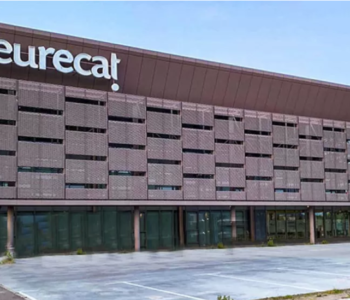
Eurecat is the leading technology center in Catalonia and the second-largest private research organization in Southern Europe. It serves as a bridge between scientific knowledge and industrial application to boost business competitiveness.

A provider of applied R&D, technological services, and specialized training for companies.

Main Services

Training: Highly specialized professional courses via Eurecat AcademyOver 650-700 professionals, an annual income of approximately €50–52M, and a portfolio of over 150 patents.

Applied R&D: Custom innovation projects for SMEs and large corporations.

Infrastructure: Access to more than 20 specialized laboratories and pilot plants for testing and prototyping.

Torribera HOTSPOT

Recinte Torribera

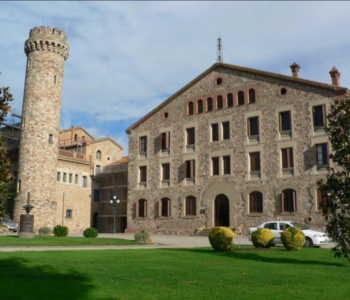
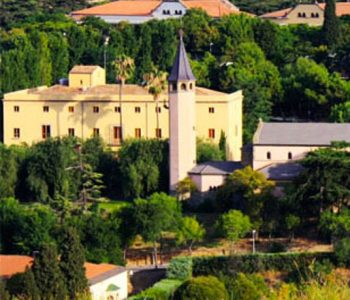
Recinte Torribera is a large, multi-use complex located just north of Barcelona. Originally a medieval farmhouse (masia) rebuilt in the 18th century, it was transformed in the early 20th century into a landmark “mental clinic” and has since evolved into a major university and research hub.

Key Areas and Functions

  • Torribera Food and Nutrition Campus (University of Barcelona): This is the site’s most prominent current feature. It is a specialized campus entirely dedicated to food sciences, nutrition, and gastronomy. It houses research labs, the UB-Bullipèdia Unit (a collaboration with chef Ferran Adrià), and various bachelor’s and master’s programs.
  • Architectural Heritage: The complex is an exceptional example of Novecentista architecture. It was designed by renowned architects Rafael Masó and Josep Maria Pericas, featuring symmetric pavilions, gardens, and a distinctive neo-Gothic church with a black tile pinnacle.
  • Healthcare and Research: The site still maintains a healthcare role as home to the Centre Dr. Emili Mira, a psychiatric and mental health facility managed by Parc de Salut Mar.
  • Nature and Sports: Bordering the Serralada de Marina Natural Park, the enclosure offers green spaces for walking and relaxation. It also includes the Torribera Sports Complex, which features swimming pools, tennis courts, and archery facilities. 
Hotspot DFactory

DFactory

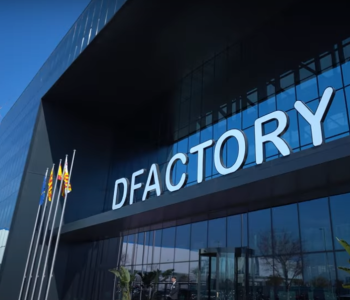
DFactory Barcelona is the leading Industry 4.0 technology hub in Southern Europe, serving as an open innovation ecosystem for digital transformation. Managed by the Consorci de la Zona Franca de Barcelona (CZFB), it brings together multinational corporations, SMEs, and research centers to develop disruptive technologies. 

Technological Focus: Specializes in 3D printing, robotics, artificial intelligence (AI), sensors, blockchain, and advanced manufacturing.

ALBA Synchrotron

ALBA synchrotron

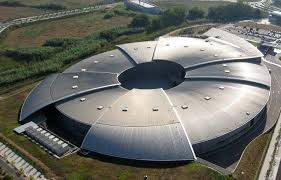
The ALBA Synchrotron is a large research infrastructure, located in Cerdanyola del Vallès (Barcelona). It is a fundamental pillar of the Spanish and European research arena, offering to academic and industrial users a wide variety of state-of-the-art instrumentation.